
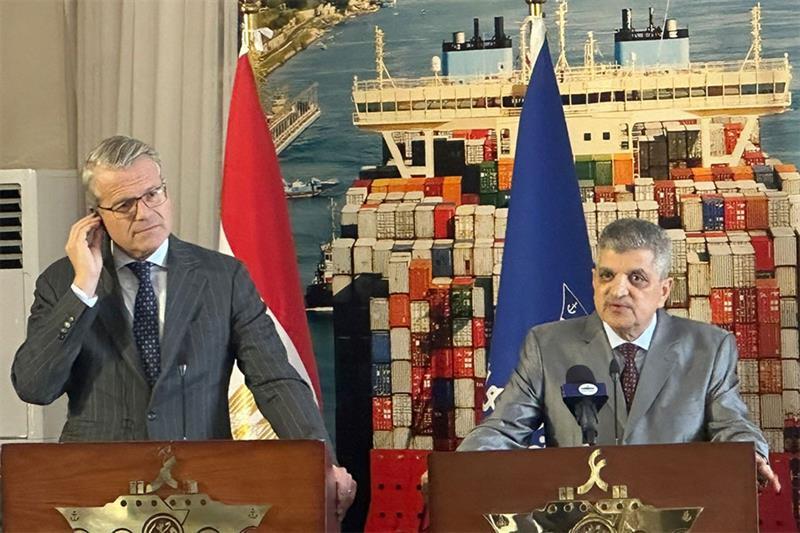
Maersk and Hapag-Lloyd Resume Suez Canal Transits on Joint IMX Service
In a significant step toward restoring maritime traffic through the Red Sea, A.P. Moller-Maersk and Hapag-Lloyd announced on February 4, 2026, that they will reroute one of their joint container services under the Gemini Cooperation to transit the Suez Canal starting mid-February.
The change applies to the IMX service (also known as ME11), connecting India and the Middle East with Mediterranean ports. Westbound voyages will utilize the vessel Albert Maersk, followed by eastbound sailings on Astrid Maersk. All transits will occur under naval protection, with crew safety, vessel security, and cargo integrity remaining the carriers' foremost priorities.
The companies indicated that similar adjustments to the SE1 and SE3 Asia-Europe services may follow when security conditions permit, with customers to be updated accordingly. No further immediate changes to the Gemini network are planned.
This cautious resumption follows Maersk's limited trial transits in late 2025 and early 2026, including passages by vessels such as Maersk Denver and Maersk Sebarok, conducted amid ongoing monitoring of regional stability. The decision reflects improved but still fragile security in the Red Sea, where Houthi-related threats had forced widespread diversions around the Cape of Good Hope since late 2023, inflating costs and extending transit times.
The move supports Egypt's efforts to revive Suez Canal traffic—a vital artery for approximately 12% of global trade and a key revenue source for the country—following substantial declines in canal revenues.
This development is particularly relevant to the Arab World Freight Alliance (AWFA), a collaborative platform uniting independent freight forwarders across the Arab region. By fostering partnerships, cross-trade opportunities, and reliable logistics networks among regional players, AWFA enables its members to better adapt to evolving route options, optimize routing via the Suez Canal when feasible, and enhance efficiency in Middle East–Mediterranean and India-linked trades amid shifting security dynamics. The alliance's focus on trusted regional collaboration positions Arab freight forwarders to capitalize on any sustained return to the shorter, more cost-effective Suez route.
Arab World Freight Alliance AWFA - Copyright
AWFA was founded to bring together the most reliable, ambitious, and service-driven freight forwarders across the Arab world under one unified platform.